World War II: America at War, 1941–1945
World War II was the largest war in history, and for the United States it was a war of transformation. A country that had tried to stay out of the fighting was attacked, mobilized as no nation ever had, fought on two oceans at once, and emerged four years later as the world's most powerful nation — and the only one with the atomic bomb. The war cost America about 405,000 lives, and it changed American society forever.
In short
Japan attacked the US naval base at Pearl Harbor, Hawaii, on 7 December 1941, killing 2,403 Americans. The United States declared war the next day, and within days Germany and Italy declared war on the United States. About 16 million Americans served in the armed forces, and 405,399 died, according to the National WWII Museum. Germany surrendered on 8 May 1945 (V-E Day) and Japan on 2 September 1945 (V-J Day), after atomic bombs were dropped on Hiroshima on 6 August and Nagasaki on 9 August.
Pearl Harbor and the decision to fight
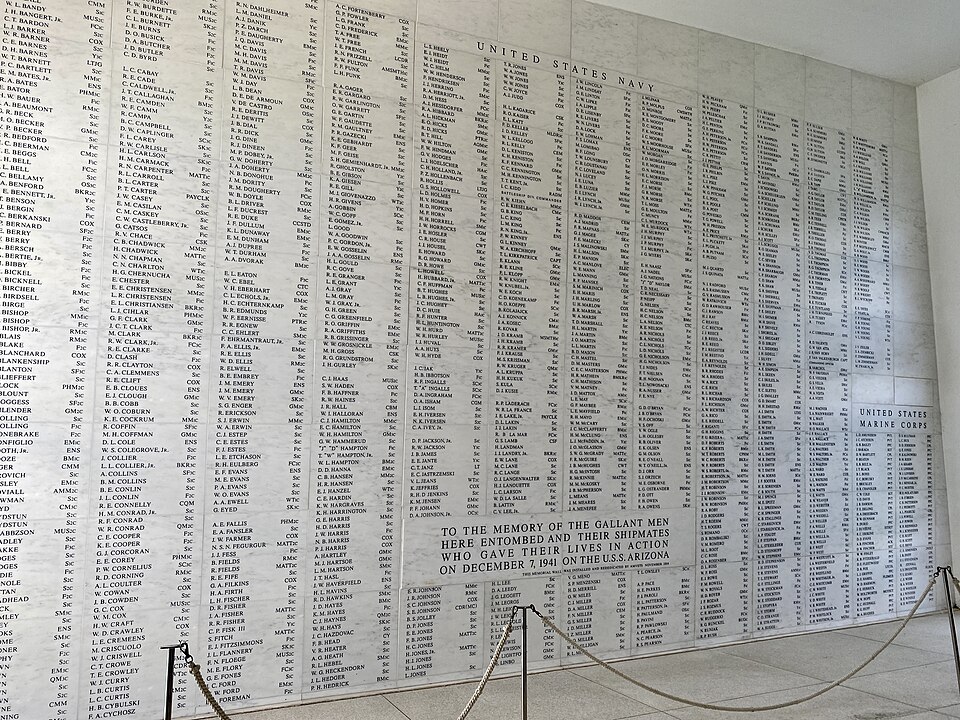
For two years the United States had watched the war in Europe and Asia from the sidelines, supplying Britain and China while insisting it would stay neutral. That ended on a Sunday morning. On 7 December 1941, Japanese aircraft launched from carriers 274 miles off Hawaii struck Pearl Harbor in two waves, sinking or damaging 19 American ships — including eight battleships — and destroying 188 aircraft. The battleship USS Arizona sank in minutes, taking about 1,100 men with her. In all, 2,403 Americans were killed and 1,178 wounded.
President Franklin D. Roosevelt called 7 December "a date which will live in infamy," and on 8 December Congress declared war on Japan, with only one dissenting vote — Jeannette Rankin, who had also voted against entering the First World War. Three days later Germany and Italy declared war on the United States, and America was at war on two fronts: against Germany and Italy in Europe and North Africa, and against Japan across the Pacific. The country mobilized on a scale never seen before: the armed forces grew from about 334,000 men in 1939 to more than 12 million at their peak.
Two wars at once
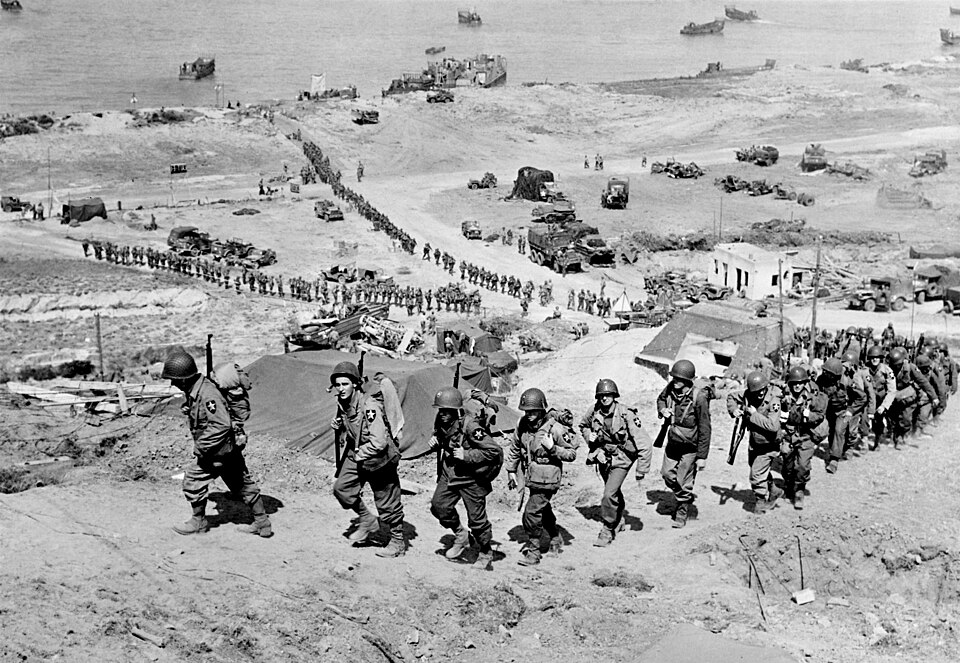
The strategy, agreed with Britain, was "Germany first." In the Pacific, the turning point came quickly: at the Battle of Midway in June 1942, American aircraft sank four Japanese carriers, ending Japan's ability to attack and beginning the long island-hopping campaign back across the Pacific — Guadalcanal in 1942–43, Iwo Jima and Okinawa in 1945. In Europe, American and British forces landed in North Africa in 1942, invaded Italy in 1943, and on D-Day, 6 June 1944, landed about 156,000 Allied troops on five beaches in Normandy, France — the largest amphibious invasion in history. By the end of August, Paris was liberated; by the spring of 1945, Allied armies were crossing into Germany itself.
The war at home was just as total. Factories that had made cars now made tanks and planes — American industry produced about 300,000 aircraft and 100,000 tanks during the war. More than 19 million women joined the workforce, and the image of "Rosie the Riveter" became a symbol of the home front. But the war also brought shame: in 1942 the government forcibly removed about 120,000 Japanese Americans from the West Coast into internment camps, a policy the United States formally apologized for in 1988. And American soldiers helped liberate the Nazi concentration camps in 1945, confronting the Holocaust — the murder of six million Jews and millions of others — for the first time.
The atomic bomb and the new world
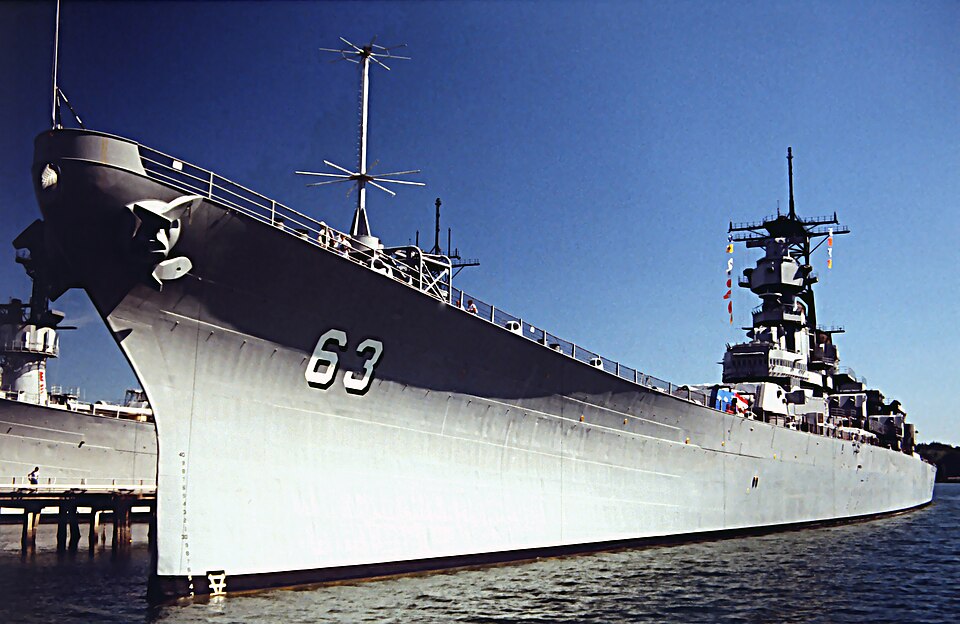
Germany surrendered on 7–8 May 1945, days after Hitler's suicide in Berlin. The war with Japan continued. Rather than invade the Japanese home islands — an operation American planners expected to cost hundreds of thousands of lives — President Harry Truman, who had taken office after Roosevelt's death in April 1945, ordered the use of a new weapon. On 6 August 1945 an atomic bomb destroyed Hiroshima; on 9 August a second destroyed Nagasaki. Japan surrendered on 14 August, and the formal surrender was signed aboard the USS Missouri on 2 September 1945. Whether the bombs were necessary remains one of the most argued questions in American history; what is certain is that they ended the war and opened the atomic age.
The war's cost was immense. About 405,399 American service members died — 291,557 in combat and the rest from other causes — and 671,278 were wounded. Worldwide, the dead numbered some 70 to 85 million, about 3% of the world's population. But the war had also ended the Great Depression, made the United States the richest and most powerful country on earth, and created a new world order: the United Nations, founded in 1945, and a Cold War with the Soviet Union that would shape the next half-century. The generation that fought the war — later called the "Greatest Generation" — came home, went to college on the GI Bill, bought houses in the new suburbs, and built the America of the post-war decades.
| Milestone | Date | What happened |
|---|---|---|
| Pearl Harbor attacked | 7 Dec 1941 | 2,403 Americans killed; US enters the war |
| Battle of Midway | Jun 1942 | Four Japanese carriers sunk; tide turns in the Pacific |
| D-Day in Normandy | 6 Jun 1944 | About 156,000 Allied troops land in France |
| Battle of the Bulge | Dec 1944 | Germany's last offensive; about 19,000 Americans killed |
| Germany surrenders | 8 May 1945 | V-E Day in Europe |
| Atomic bombs dropped | 6 & 9 Aug 1945 | Hiroshima and Nagasaki destroyed |
| Japan surrenders | 2 Sep 1945 | Formal surrender aboard USS Missouri |
Sources: National WWII Museum; US Congress, Congressional Record (2005); Encyclopaedia Britannica, "World War II"; Library of Congress. Checked 28 November 2026.