American Independence: Revolution, the Constitution, and a New Nation


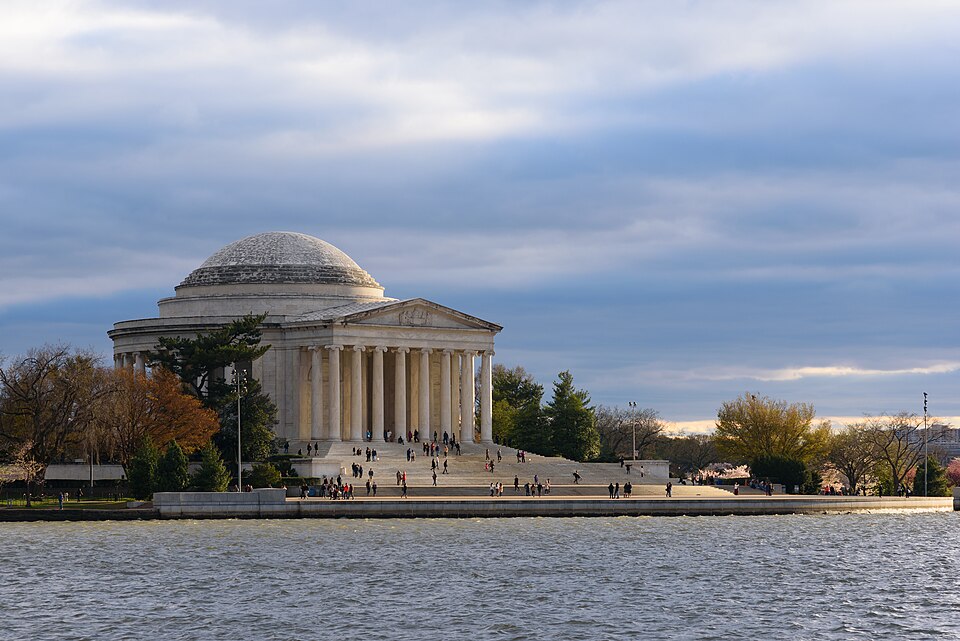
The United States began as a rebellion. Thirteen British colonies on the Atlantic coast, taxed by a Parliament in which they had no voice, took up arms in 1775, declared independence in 1776, and — with French help — won a war against the most powerful empire on earth. Then came the harder task: building a government that could hold thirteen quarrelsome states together without becoming the tyranny they had just fought.
In short
The American Revolution began with fighting at Lexington and Concord on 19 April 1775. Congress adopted the Declaration of Independence on 4 July 1776 (it had voted for independence on 2 July). British forces surrendered at Yorktown, Virginia, on 19 October 1781, and the Treaty of Paris of 3 September 1783 recognized American independence. The Constitution, signed on 17 September 1787, replaced the weak Articles of Confederation and took effect in 1789; the Bill of Rights followed on 15 December 1791.
Why the colonies rebelled
By the 1760s the thirteen colonies were prosperous, self-governing in many matters, and used to running their own affairs. After the Seven Years' War (1756–63), Britain tried to make the colonies help pay for their own defense, imposing taxes such as the Stamp Act of 1765 and the Townshend duties of 1767. The colonists' objection was not mainly the size of the taxes — they were small — but the principle: "no taxation without representation." Parliament in London taxed them, but no colonist sat in Parliament.
Protest escalated: boycotts of British goods, the Boston Tea Party of December 1773, and Britain's harsh response, the Coercive Acts of 1774. In September 1774 delegates from twelve colonies met in Philadelphia as the First Continental Congress. In April 1775 British troops marching to seize colonial arms at Concord were met by armed colonists at Lexington and Concord — "the shot heard round the world." War had begun, and in June 1775 Congress put George Washington, a Virginia planter and veteran of the French and Indian War, in command of a new Continental Army.
Declaring independence and winning the war
Independence was not the aim at first — most colonists in 1775 still hoped for reconciliation. Thomas Paine's pamphlet Common Sense, published in January 1776, changed minds by arguing plainly that monarchy itself was the problem. In June, Congress appointed a committee to draft a declaration; Thomas Jefferson wrote the main text, with its famous claim that "all men are created equal" and endowed with "certain unalienable Rights" — life, liberty, and the pursuit of happiness. Congress voted for independence on 2 July and adopted the Declaration on 4 July 1776.
The war was long and nearly lost several times. Washington's army survived a terrible winter at Valley Forge in 1777–78, and the turning point came at Saratoga in October 1777, when an American victory persuaded France to join the war as an ally in 1778, bringing money, ships, and soldiers. In October 1781 American and French forces trapped the British army under General Cornwallis at Yorktown, Virginia, where it surrendered on 19 October. Fighting largely ended there, and the Treaty of Paris, signed on 3 September 1783, recognized the United States as independent, with its western border at the Mississippi River.
A new kind of government
The first American government, under the Articles of Confederation (in effect from 1781), was deliberately weak: Congress could not tax, could not regulate trade, and needed the agreement of nine of thirteen states to act. By 1787 most leaders agreed it was failing. In May 1787 delegates met in Philadelphia — officially to revise the Articles, in fact to write a new Constitution. After four months of argument they produced a document that balanced power between the states and the federal government, and between the president, Congress, and the courts.
The Constitution was signed on 17 September 1787 and took effect in 1789 after nine states ratified it; George Washington was sworn in as the first president on 30 April 1789. Critics demanded a bill of rights, and in 1791 the first ten amendments were ratified, guaranteeing freedoms of speech, religion, and the press, the right to a fair trial, and other protections. The system was far from perfect — it protected slavery, and it left women and most others without the vote — but it created a republic that has lasted, with amendments, for more than 230 years.
| Milestone | Date | What happened |
|---|---|---|
| Lexington and Concord | 19 Apr 1775 | First fighting of the Revolutionary War |
| Declaration adopted | 4 Jul 1776 | Congress adopts the Declaration of Independence |
| Victory at Saratoga | Oct 1777 | France joins the war as America's ally |
| Surrender at Yorktown | 19 Oct 1781 | Cornwallis surrenders; major fighting ends |
| Treaty of Paris | 3 Sep 1783 | Britain recognizes American independence |
| Constitution signed | 17 Sep 1787 | New federal Constitution agreed in Philadelphia |
| Bill of Rights ratified | 15 Dec 1791 | First ten amendments take effect |
Sources: National Archives; Library of Congress; Jamestown-Yorktown Foundation; Encyclopaedia Britannica, "American Revolution"; Rutherford Institute timeline of the Constitution. Checked 28 November 2026.