The Industrial Revolution in America: Factories, Railroads, and Steel
In 1790 the United States was a nation of farmers: about nine in ten Americans worked the land. A century later it was the greatest industrial power on earth, making more steel, more coal, and more manufactured goods than any other country. The change was the Industrial Revolution — new machines, new factories, new railroads, and new cities — and it remade American life as thoroughly as any war or election.
In short
The American Industrial Revolution began with Samuel Slater's textile mill at Pawtucket, Rhode Island, in 1790, and Eli Whitney's cotton gin of 1793, which made cotton the country's leading export. The Erie Canal opened in 1825, the telegraph arrived in 1844, and after the Civil War steel, oil, and railroads drove a second wave of growth. By the 1890s the United States had overtaken Britain as the world's largest economy — a position it has held ever since.
The first factories
The first American factories made cloth. In 1790 Samuel Slater, a young Englishman who had memorized the design of British textile machinery, built a water-powered spinning mill at Pawtucket, Rhode Island — the first successful factory in the United States. In 1793 Eli Whitney invented the cotton gin, a machine that cleaned cotton fifty times faster than by hand. The gin made cotton enormously profitable, and cotton became America's leading export — but it also made slavery more profitable, and entrenched it in the South for another seventy years.
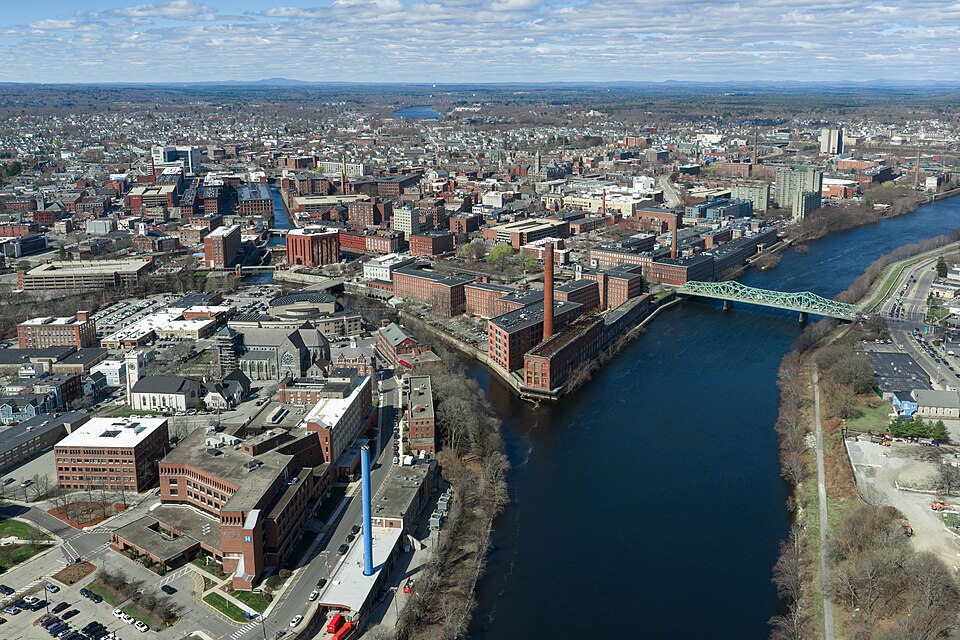
In the 1820s the mill town of Lowell, Massachusetts, showed what the new system could look like: large factories, water-powered, staffed largely by young women from farm families — the "Lowell mill girls" — who lived in company boarding houses and worked twelve-hour days, six days a week. Lowell was celebrated as a model, but the mill girls themselves organized some of America's first labor protests, walking out in 1834 and 1836 over wage cuts and longer hours.
Canals, railroads, and the telegraph
Machines needed transport, and transport transformed the country. The Erie Canal, completed in 1825, joined the Hudson River to the Great Lakes and cut the cost of moving goods between New York and the Midwest to a fraction of what it had been. Railroads followed: the first American railroad opened in 1830, and by 1860 the country had about 30,000 miles of track. The telegraph, demonstrated by Samuel Morse in 1844 with the message "What hath God wrought," sent news across the continent in minutes instead of weeks.
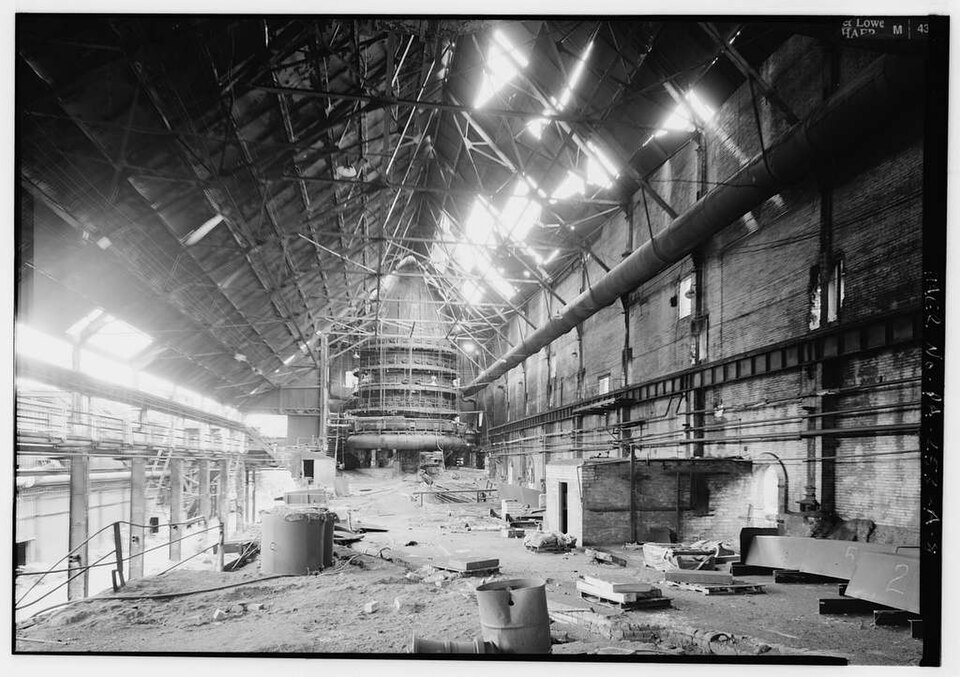
After the Civil War, growth accelerated into a second industrial revolution. Andrew Carnegie's steel mills, John D. Rockefeller's Standard Oil, and the railroads of Cornelius Vanderbilt built fortunes of a size the world had never seen — and companies of a size no one had imagined. The Bessemer process, introduced in the 1850s, made steel cheap enough for bridges, skyscrapers, and railroads; by 1900 the United States produced more steel than Britain and Germany combined.
The human cost — and the response
The new wealth was not shared evenly. Factory workers, many of them immigrants from Ireland, Germany, Italy, and Eastern Europe, worked long hours in dangerous conditions for low pay. Children worked in mines and mills — by 1900 about 2 million American children were working, many under the age of fourteen. The gap between rich and poor became a political issue: Mark Twain called the era the "Gilded Age" — glittering on the surface, corrupt underneath.
Workers fought back. Labor unions grew, and strikes became common: the Haymarket affair in Chicago in 1886, the Homestead steel strike of 1892, and the Pullman strike of 1894, which was broken by federal troops. Reformers pushed for laws limiting child labor, capping working hours, and making factories safer — laws that mostly arrived in the twentieth century. The Industrial Revolution had made America rich and powerful, but it also created the questions — about inequality, about the power of big business, about the rights of workers — that American politics still argues about today.
| Milestone | Date | What happened |
|---|---|---|
| Slater's mill opens | 1790 | First successful textile factory, Pawtucket, Rhode Island |
| Cotton gin invented | 1793 | Eli Whitney's gin makes cotton the leading export |
| Erie Canal opens | 1825 | Hudson River joined to the Great Lakes |
| Telegraph demonstrated | 1844 | Morse sends the first message, Washington to Baltimore |
| Bessemer steel | 1850s | Cheap steel transforms bridges, rails, and buildings |
| Transcontinental railroad | 1869 | First rail link across the continent completed |
| US largest economy | 1890s | American output overtakes Britain's |
Sources: Encyclopaedia Britannica, "Industrial Revolution"; Smithsonian Institution; Library of Congress; National Park Service, Lowell National Historical Park. Checked 28 November 2026.