Christopher Columbus: The 1492 Voyage That Changed the World
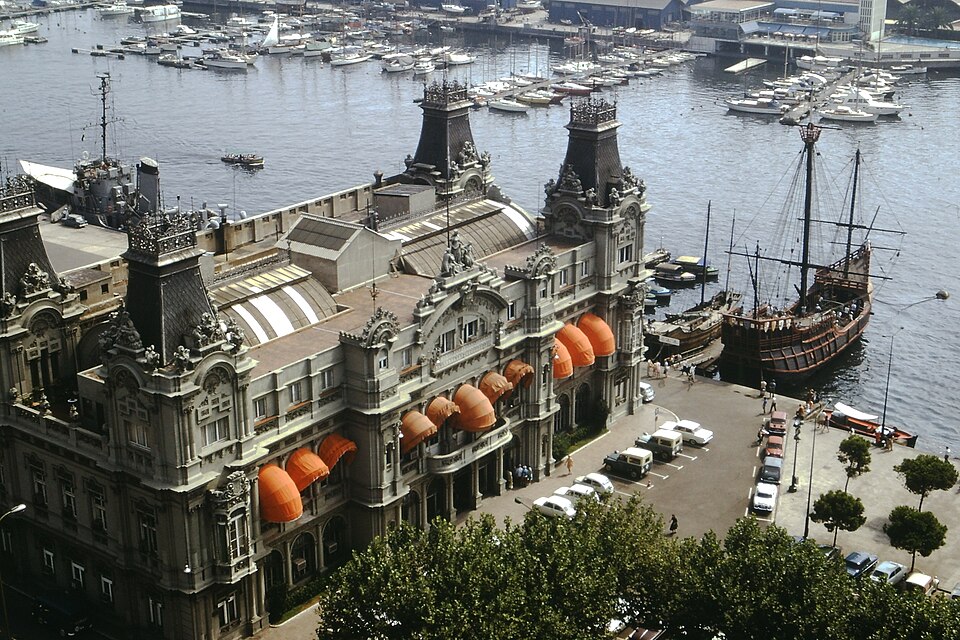
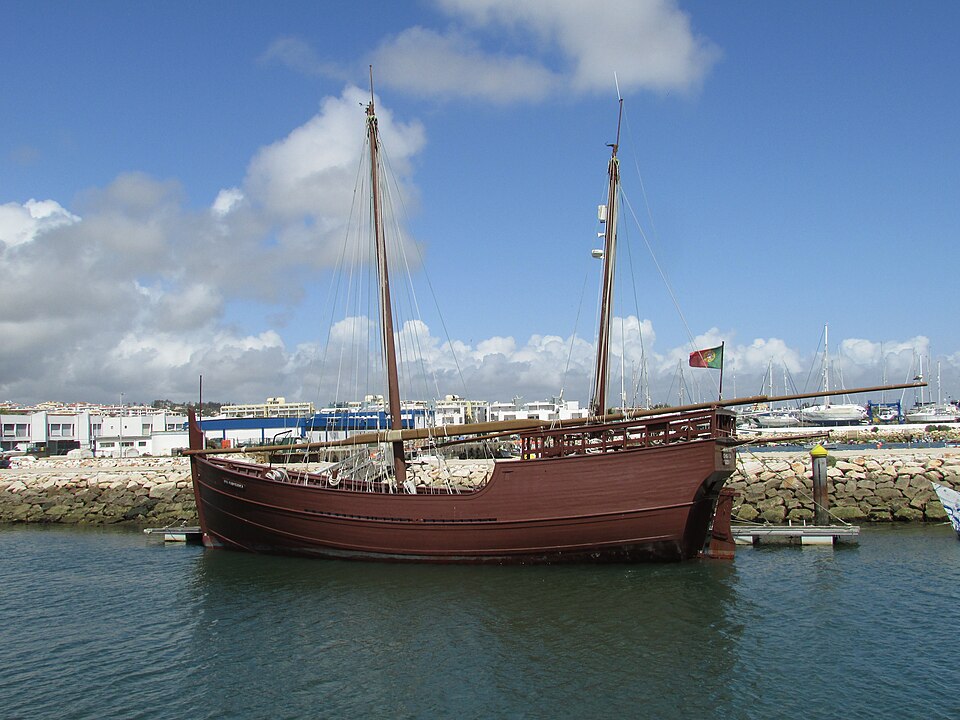
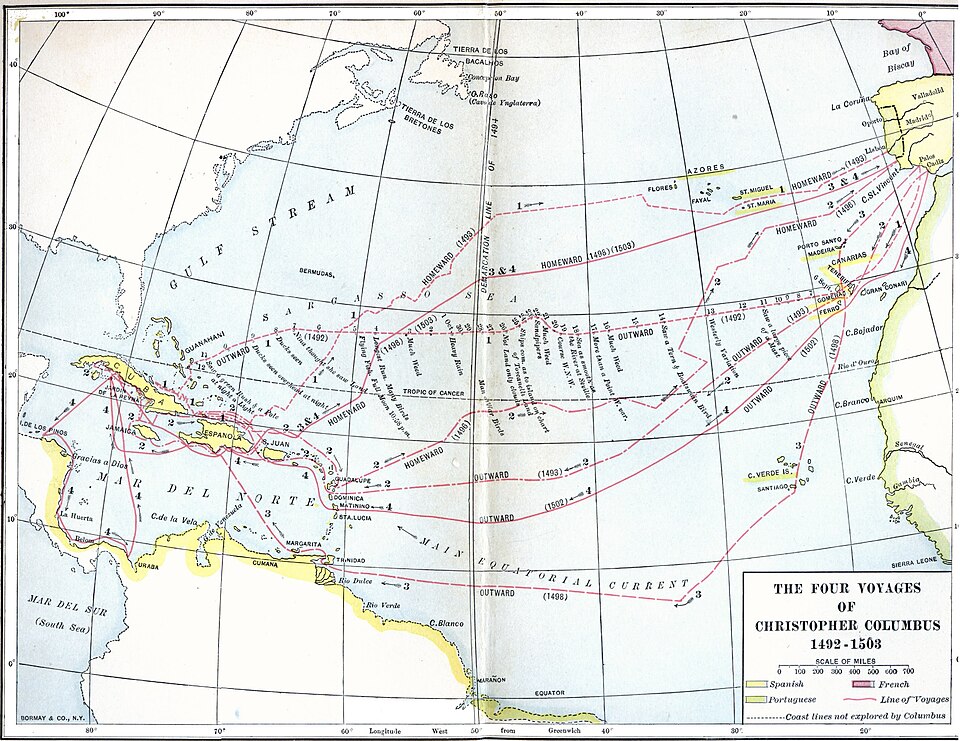
In 1492 a Genoese sailor in the service of Spain sailed west across the Atlantic looking for Asia — and reached a continent he never knew existed. Christopher Columbus's voyage did not discover an empty land: millions of people already lived in the Americas. But it did begin the lasting connection between Europe and the Americas, and with it, five centuries of trade, migration, conquest, and argument about what his voyage really meant.
In short
Christopher Columbus left Palos, Spain, on 3 August 1492 with three ships — the Niña, the Pinta, and the Santa María — and made landfall in the Bahamas on 12 October 1492, on an island the Taíno people called Guanahani. He made four voyages to the Americas in all, between 1492 and 1504, and died in 1506 still believing he had reached Asia. The exact island of his first landfall is still debated; San Salvador in the Bahamas is the most commonly accepted candidate.
A sailor looking for Asia
Columbus was born in Genoa, in what is now Italy, around 1451, and spent his life at sea. He believed — wrongly — that the world was much smaller than it is, and that Asia lay only a few thousand miles west of Europe across the Atlantic. Portugal's king turned his plan down, and Spanish committees twice dismissed it. But after the fall of Granada in 1492, Queen Isabella and King Ferdinand of Spain agreed to fund him: the Capitulations of Santa Fe, signed in April 1492, promised him the title Admiral of the Ocean Sea, a share of the profits, and governorship of any lands he found.
His fleet was small: three ships and about 90 men. The Santa María was the largest and served as flagship; the Niña and the Pinta were smaller, faster caravels, commanded by the Pinzón brothers of Palos. They sailed south to the Canary Islands first, then turned west on 6 September 1492, into an ocean no European had ever crossed. After five weeks with no land in sight, the crew grew fearful, and on 7 October the ships changed course to the southwest, following birds. At 2 a.m. on 12 October, a lookout on the Pinta, Rodrigo de Triana, shouted that he saw land.
Landfall, and what followed
The land was a low island in the Bahamas, which Columbus named San Salvador. Its Taíno inhabitants called it Guanahani. Columbus believed he had reached the outskirts of Asia, and so he called the people he met "Indians" — a name that stuck for centuries. He sailed on to Cuba on 28 October and to Hispaniola (the island shared today by Haiti and the Dominican Republic) on 5 December. On Christmas Day 1492 the Santa María ran aground and had to be abandoned; its timbers were used to build a small fort, La Navidad, where Columbus left 39 men. He returned to Spain in March 1493, a celebrity.
Columbus made three more voyages — in 1493, 1498, and 1502 — exploring the Caribbean, the coast of South America, and Central America. But as governor of the new Spanish settlements he proved harsh and unpopular, and in 1500 he was arrested and sent back to Spain in chains. He was released, but never regained his governorship. He died in Valladolid, Spain, on 20 May 1506, still convinced he had found a route to Asia. It was the Italian explorer Amerigo Vespucci, writing a few years later, who argued that these lands were a new continent — which is why the continents are called America, not Columbia.
The debate about Columbus
For centuries Columbus was celebrated in the United States as a hero who discovered America — the first Columbus Day was held in 1792, and the federal holiday dates to 1937. In recent decades that celebration has been challenged. Columbus's voyages began the colonization of the Americas, and on Hispaniola his rule brought forced labor, enslavement, and violence against the Taíno, whose population collapsed within a generation. Historians also note that he was not the first to reach the Americas: Norse sailors had reached Newfoundland around the year 1000, and of course Native peoples had lived there for thousands of years.
Today many US states and cities mark the second Monday in October as Indigenous Peoples' Day instead of, or alongside, Columbus Day. The argument is not about whether the voyage mattered — it changed the world — but about how to remember it: as a feat of navigation, as the start of a conquest, or as both at once. This guide takes the last view: Columbus's skill as a sailor was real, and so were the consequences for the peoples he met.
| Milestone | Date | What happened |
|---|---|---|
| Sails from Palos | 3 Aug 1492 | Three ships, about 90 men, bound west for Asia |
| Landfall in the Bahamas | 12 Oct 1492 | Guanahani (San Salvador) reached; first landfall debated |
| Santa María wrecked | 25 Dec 1492 | Flagship runs aground off Hispaniola |
| Returns to Spain | Mar 1493 | Columbus reports his discovery to Ferdinand and Isabella |
| Second voyage | 1493–96 | A much larger fleet; first permanent Spanish town founded |
| Third and fourth voyages | 1498; 1502–04 | Reaches South America and Central America |
| Dies in Spain | 20 May 1506 | Still believing he had reached Asia |
Sources: Encyclopaedia Britannica, "Christopher Columbus"; HISTORY.com; Library of Congress; Smithsonian Institution; New World Encyclopedia. Checked 28 November 2026.