Native Peoples of America: Thousands of Years Before 1492
America's history did not begin in 1492. People had lived on this continent for thousands of years before any European ship arrived — building cities, farming the land, trading across vast distances, and governing themselves through councils, chiefs, and confederacies. The story of America starts with them, and it is still going on: more than 570 federally recognized Tribal Nations live in the United States today.
In short
Native peoples reached the Americas thousands of years before Columbus, and by 1492 their societies ranged from the great city of Cahokia to the cliff dwellings of Mesa Verde and the Iroquois Confederacy. How many people lived in the Americas in 1492 is still debated — estimates run from about 8 million to more than 100 million for the whole hemisphere, with a 2019 study putting the figure at about 60 million. After 1492, disease, war, and forced removal cut those populations sharply, but Native nations survived and remain part of America today.
The first Americans
People reached the Americas from Asia during the last Ice Age, crossing a land bridge that once joined Siberia to Alaska, and then spreading south across two continents. Archaeologists generally agree that people were in North America by about 13,000 years ago, and many sites suggest earlier dates. Over thousands of years they adapted to every landscape on the continent: they hunted mammoths on the plains, fished the Pacific coast, farmed corn in the Southwest, and built towns along the Mississippi River.
By 1492 the continent held hundreds of distinct peoples, speaking hundreds of languages. There was no single Native American culture, any more than there was a single European one. The peoples of the Pacific Northwest built great wooden houses and carved totem poles; the peoples of the Southwest built multi-story adobe towns; the peoples of the Eastern Woodlands farmed corn, beans, and squash — the "three sisters" — and lived in towns of thousands.
Cities before Columbus
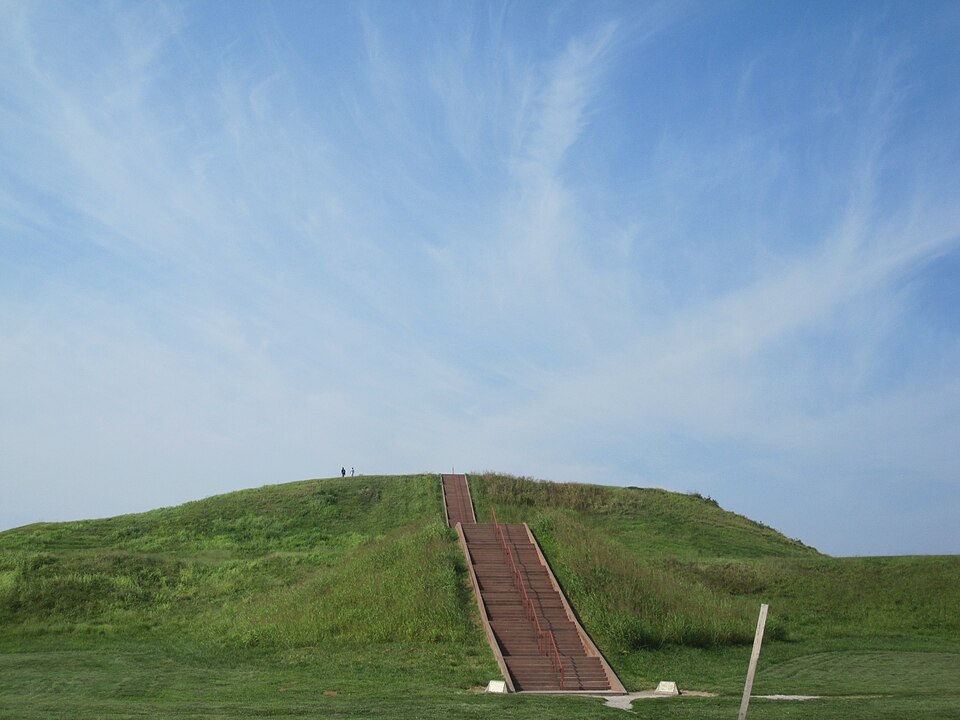
The largest city north of Mexico before Columbus was Cahokia, near present-day St. Louis, Missouri. Around 1050 to 1200, Cahokia held tens of thousands of people — larger than London at the same time, by some estimates — and its great earthen mound, Monk's Mound, is still the largest earthen structure in the Americas. Cahokia traded with peoples hundreds of miles away and built a city of plazas, mounds, and a wooden circle of posts that tracked the sun.
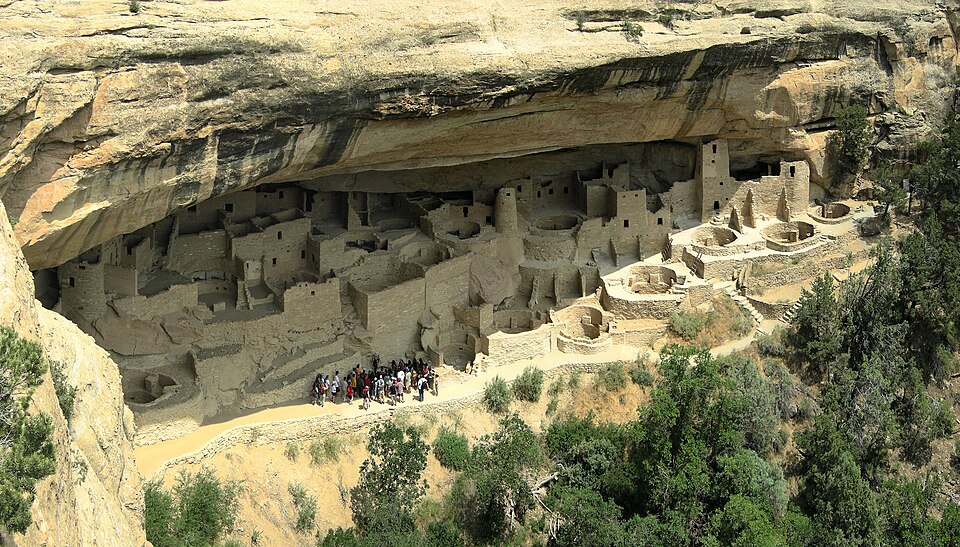
In the Southwest, the Ancestral Puebloans built cliff dwellings at Mesa Verde in Colorado in the 1100s and 1200s, whole villages tucked into rock overhangs. In the Northeast, the Haudenosaunee — the Iroquois Confederacy of the Mohawk, Oneida, Onondaga, Cayuga, and Seneca nations — joined together under the Great Law of Peace. When the confederacy was founded is debated: Haudenosaunee tradition dates it to the 1100s, while some historians place it in the 1400s or 1500s. Its council system, in which decisions needed the agreement of the member nations, later impressed American founders such as Benjamin Franklin.
Disease, removal, and survival
European arrival brought catastrophe. Diseases the peoples of the Americas had never met — above all smallpox — spread faster than any army, and a 2019 study estimated that the Indigenous population of the whole hemisphere fell from more than 60 million before 1492 to about 6 million by 1600. Wars, enslavement, and the loss of land did the rest. In 1830 Congress passed the Indian Removal Act, and in 1838–39 the US Army forced the Cherokee and other southeastern peoples west to Oklahoma on the Trail of Tears, a journey on which about 4,000 Cherokee are commonly said to have died — though the true number is uncertain and may have been higher.
The pressure did not stop there. In 1890, at Wounded Knee in South Dakota, US soldiers killed some 250 to 300 Lakota men, women, and children — the last large-scale killing of the Indian Wars. Yet Native peoples survived. The Indian Citizenship Act of 1924 made all Native Americans born in the United States citizens, and in the twentieth century tribal governments rebuilt, won court victories, and revived languages and ceremonies. Today the United States recognizes 574 federally recognized Tribal Nations, and Native history is American history — its first chapter and a living one.
| Milestone | Date | What happened |
|---|---|---|
| Cahokia at its height | c. 1050–1200 | Largest city north of Mexico; Monk's Mound built |
| Mesa Verde cliff dwellings | c. 1190s | Ancestral Puebloan villages built into cliffs |
| Iroquois Confederacy founded | 1100s–1500s (debated) | Five nations join under the Great Law of Peace |
| Indian Removal Act | 1830 | Congress authorizes forced removal of eastern peoples |
| Trail of Tears | 1838–39 | Cherokee forced west; about 4,000 deaths commonly cited |
| Wounded Knee | 29 Dec 1890 | Some 250–300 Lakota killed by US soldiers |
| Indian Citizenship Act | 1924 | US citizenship for all Native Americans born in the US |
Sources: Smithsonian National Museum of the American Indian; National Park Service, "Cahokia Mounds" and "Mesa Verde"; Library of Congress; Encyclopaedia Britannica, "Native American"; Koch et al., Quaternary Science Reviews (2019) for the population estimate. Checked 28 November 2026.