The Great Depression: Crash, Breadlines, and the New Deal
The Great Depression was the worst economic disaster in American history. It began with a stock market crash in 1929, deepened into a collapse of banks, farms, and factories, and left about one American worker in four without a job. It lasted a decade, reshaped what Americans expected from their government, and only ended when the Second World War put the country back to work.
In short
The stock market crashed on 24 and 29 October 1929 — Black Thursday and Black Tuesday. By 1933 the US unemployment rate had reached 24.9%, about 12,830,000 people out of work, according to the FDR Presidential Library, and about 9,000 of the country's 25,000 banks had failed. President Franklin D. Roosevelt, inaugurated on 4 March 1933, answered with the New Deal, a wave of programs that created jobs, regulated banks, and built the Social Security system in 1935.
The crash
The 1920s had been a boom: factories hummed, radios and cars spread, and the stock market climbed year after year. Many Americans bought shares on borrowed money — "on margin" — betting that prices would keep rising. But the boom rested on shaky ground: farms had been in trouble all decade, factories were producing more than people could buy, and wealth was concentrated at the top. The economy had already begun to slow in the summer of 1929.
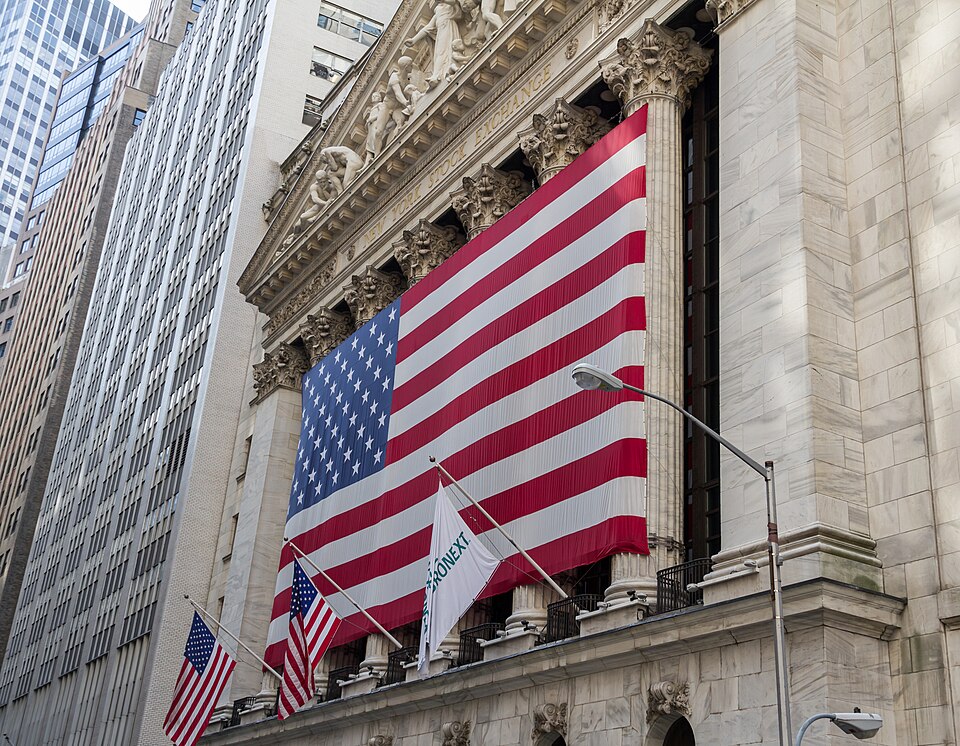
In October 1929 the market broke. On Black Thursday, 24 October, and Black Tuesday, 29 October, panic selling overwhelmed the New York Stock Exchange — some 16 million shares changed hands on Black Tuesday alone. The Dow Jones Industrial Average, which had peaked at 381 in September 1929, fell to 198 within two months and kept falling, to a low of 41 in July 1932 — a drop of about 89%. It did not regain its 1929 high until 1954. The crash itself did not cause the Depression — the economy was already weakening — but it destroyed confidence and wiped out the savings of millions.
Breadlines and bank failures
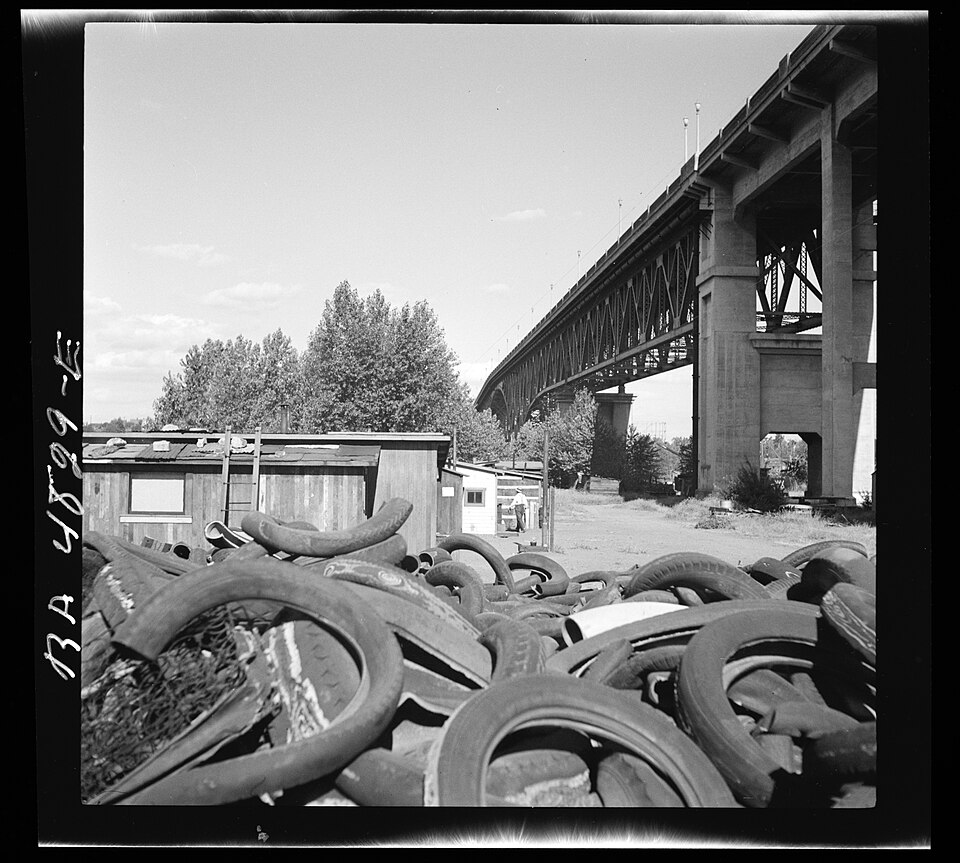
What turned a crash into a decade of misery was the collapse of the banking system. Americans rushed to withdraw their money, banks that had lent recklessly failed, and the failures spread: about 9,000 banks closed between 1930 and 1933, out of roughly 25,000. With credit frozen, businesses closed and workers were laid off. By 1933 unemployment had reached 24.9% — about 12,830,000 people — and the wages of those who kept their jobs had fallen by more than 40% since 1929. Breadlines stretched around city blocks, and shantytowns of the homeless — bitterly nicknamed "Hoovervilles" after President Herbert Hoover — grew on the edges of American cities.
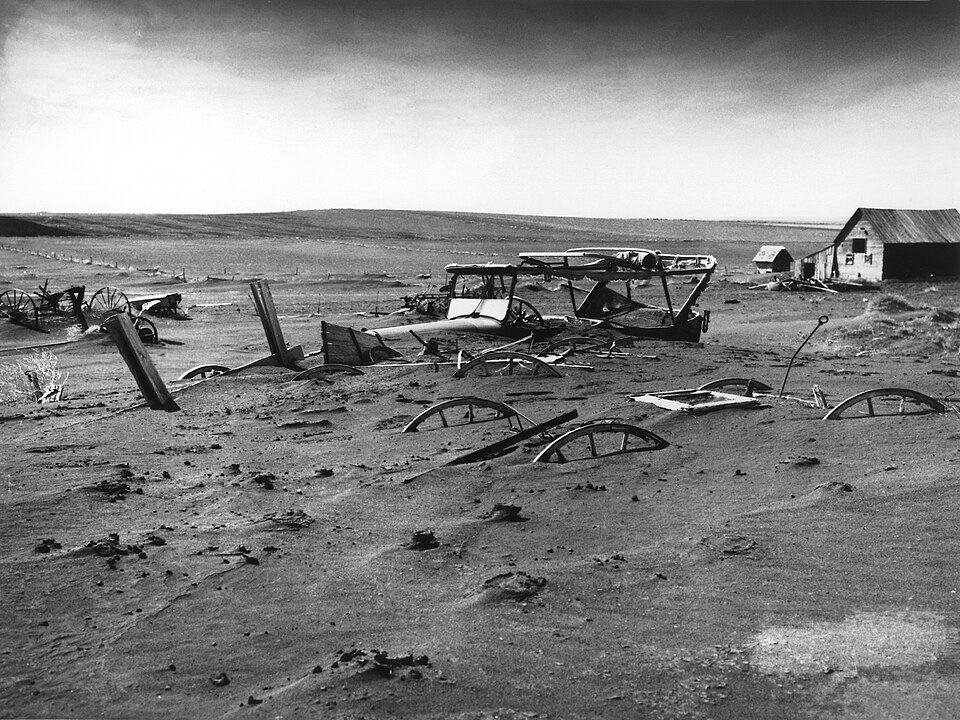
Farmers suffered worst of all. Crop prices collapsed, and in the Great Plains a drought turned farmland to dust. The Dust Bowl of the 1930s — great storms of topsoil that darkened the sky as far away as New York — drove hundreds of thousands of farm families west to California, the "Okies" of John Steinbeck's novel The Grapes of Wrath. About a third of farmers lost their land. The Depression was not only an American disaster: it spread around the world, and in Germany the crisis helped bring Adolf Hitler to power in 1933.
The New Deal
Franklin D. Roosevelt took office on 4 March 1933 promising "a new deal for the American people." In his first hundred days he closed the banks briefly to stop the panic, created federal programs to put the unemployed to work, and regulated the stock market and the banks. The Civilian Conservation Corps put young men to work planting trees and building parks; the Works Progress Administration built roads, schools, and airports; the Tennessee Valley Authority brought electricity to a poor region of the South.
The most lasting New Deal law was the Social Security Act of 1935, which created pensions for older Americans and unemployment insurance — the first time the federal government had taken responsibility for the economic security of ordinary people. But the New Deal did not end the Depression: unemployment was still about 17% in 1939, and a new recession hit in 1937–38. What finally ended it was the Second World War, when massive government spending on arms and supplies put every factory to work and unemployment fell below 2%. The Depression's lesson endured: Americans now expected their government to act when the economy failed, and the New Deal's programs — Social Security above all — remain part of American life.
| Milestone | Date | What happened |
|---|---|---|
| Stock market crash | 24–29 Oct 1929 | Black Thursday and Black Tuesday; 16 million shares sold on 29 Oct |
| Bank failures mount | 1930–33 | About 9,000 of 25,000 banks fail |
| Unemployment peaks | 1933 | 24.9% unemployed — about 12,830,000 people |
| FDR inaugurated | 4 Mar 1933 | New Deal begins with the first hundred days |
| Social Security Act | 1935 | Pensions and unemployment insurance created |
| Dust Bowl worst years | 1934–36 | Drought and dust storms drive farm families west |
| War ends the Depression | 1941–42 | Defense spending drives unemployment below 2% |
Sources: FDR Presidential Library & Museum, "Great Depression Facts"; Encyclopaedia Britannica, "Great Depression"; Federal Reserve History; National Bureau of Economic Research. Checked 28 November 2026.