The Civil Rights Movement: The Fight for Equality
A century after slavery was abolished, Black Americans in the South still could not vote freely, could not sit at a lunch counter, could not attend the same schools as white children, and could be killed for trying. The Civil Rights Movement of the 1950s and 1960s changed that — not through war, but through boycotts, marches, sit-ins, and the courage of ordinary people who refused to accept the law as it stood. It was the second great remaking of America, after the Civil War.
In short
The modern movement is often dated from the Montgomery bus boycott, which began on 5 December 1955 after Rosa Parks was arrested for refusing to give up her seat, and lasted 381 days. The March on Washington on 28 August 1963 drew about 250,000 people and heard Martin Luther King Jr.'s "I Have a Dream" speech. The Civil Rights Act was signed on 2 July 1964 and the Voting Rights Act on 6 August 1965. King was assassinated on 4 April 1968.
Segregation and the spark
After the Civil War, the South rebuilt a system of racial rule — Jim Crow — that separated Black and white Americans in schools, buses, restaurants, parks, and even drinking fountains, and kept Black citizens from voting through poll taxes, literacy tests, and violence. The Supreme Court had approved "separate but equal" in Plessy v. Ferguson in 1896. But in 1954, in Brown v. Board of Education, the Court reversed itself unanimously, ruling that segregated schools were "inherently unequal." The decision did not end segregation — Southern states resisted for years — but it gave the movement its legal foundation.
The movement's first great victory came in Montgomery, Alabama. On 1 December 1955 Rosa Parks, a 42-year-old seamstress and longtime activist with the NAACP, refused to give up her bus seat to a white passenger and was arrested. Montgomery's Black community, organized by the young pastor Martin Luther King Jr., boycotted the city's buses for 381 days, walking to work in all weather, until the Supreme Court ruled bus segregation unconstitutional in November 1956. The boycott showed that nonviolent mass protest could work — and it made King, then 27 years old, a national figure.
Sit-ins, Freedom Rides, and Birmingham
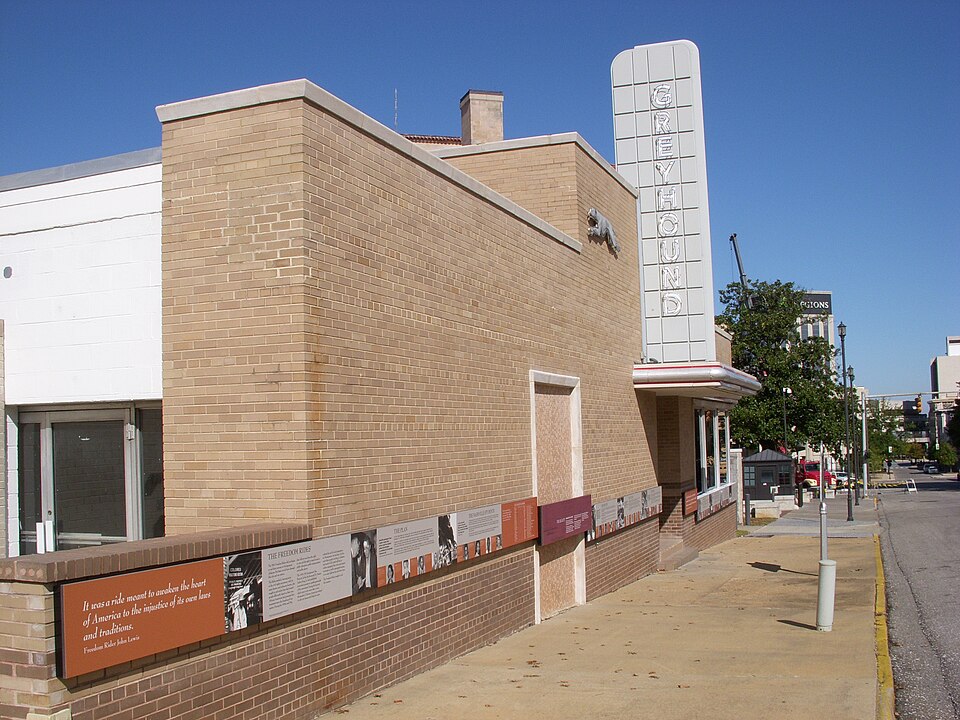
The movement spread. In February 1960 four Black college students sat down at a whites-only lunch counter in Greensboro, North Carolina, and refused to leave; within weeks sit-ins had spread to dozens of cities. In 1961 the Freedom Rides sent integrated groups of young people on buses through the South to test a Supreme Court ruling against segregated interstate travel; they were beaten and their buses burned, but they kept coming, and the federal government was forced to enforce the ruling.
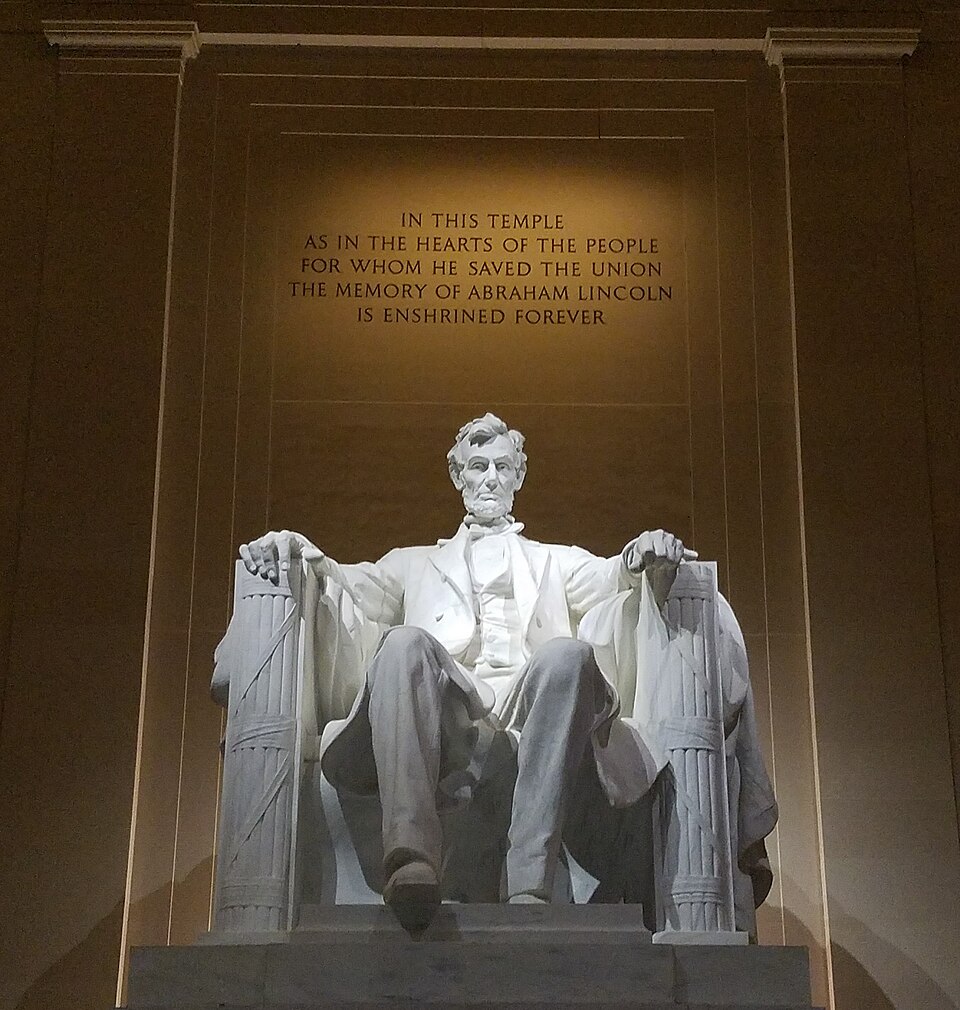
In the spring of 1963 King led a campaign in Birmingham, Alabama, one of the most segregated cities in America. Television showed police using dogs and fire hoses on peaceful marchers, including children, and the images shocked the nation. That August, about 250,000 people marched on Washington, D.C., where King delivered his "I Have a Dream" speech from the steps of the Lincoln Memorial, describing a future in which his children would be judged "not by the color of their skin but by the content of their character." A month later, a bomb at a Birmingham church killed four Black girls — a reminder of the violence the movement faced.
The laws, and the long road after
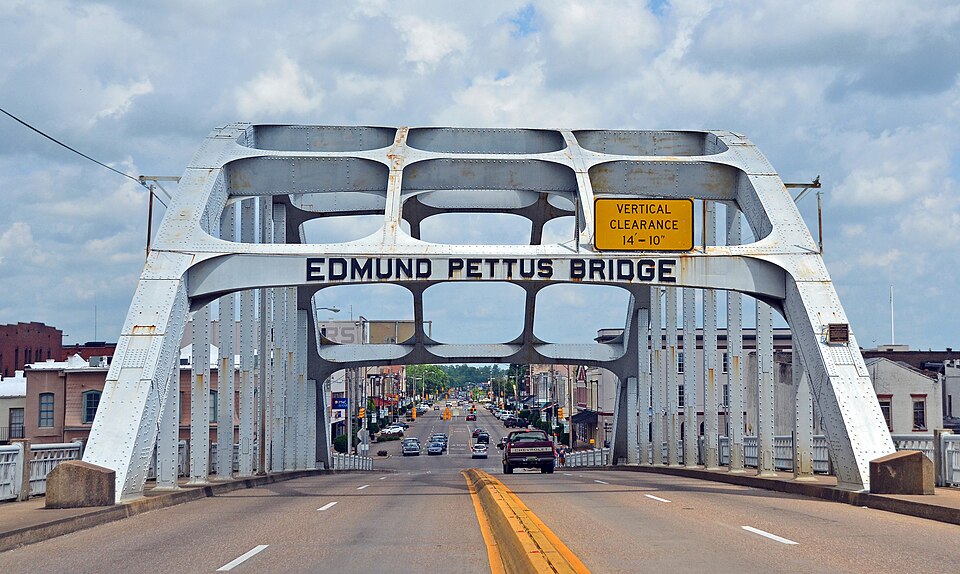
The marches moved Congress. The Civil Rights Act of 1964, signed by President Lyndon B. Johnson on 2 July, outlawed segregation in public places and banned employment discrimination. After the Selma marches of 1965 — in which marchers crossing the Edmund Pettus Bridge were beaten by state troopers on "Bloody Sunday," 7 March — Johnson pushed through the Voting Rights Act, signed on 6 August 1965, which outlawed the devices Southern states used to keep Black citizens from voting. The Fair Housing Act of 1968, signed days after King's assassination, banned discrimination in housing.
King was assassinated in Memphis, Tennessee, on 4 April 1968, while supporting a strike of sanitation workers. He was 39. The movement he led had achieved what had seemed impossible a decade earlier: the legal end of segregation and the restoration of the vote. But its work was not finished. The Voting Rights Act was weakened by a Supreme Court decision in 2013, and debates about voting access, policing, and racial inequality continue today. The movement's legacy is a set of laws, a method — nonviolent protest — that has been copied around the world, and a reminder that the promises of the Declaration of Independence, that all men are created equal, have had to be fought for in every generation.
| Milestone | Date | What happened |
|---|---|---|
| Brown v. Board of Education | 17 May 1954 | Supreme Court rules school segregation unconstitutional |
| Montgomery bus boycott | Dec 1955–Dec 1956 | 381-day boycott ends bus segregation |
| Greensboro sit-ins | Feb 1960 | Students sit at a whites-only lunch counter |
| March on Washington | 28 Aug 1963 | About 250,000 march; "I Have a Dream" speech |
| Civil Rights Act | 2 Jul 1964 | Segregation in public places outlawed |
| Voting Rights Act | 6 Aug 1965 | Barriers to Black voting outlawed |
| King assassinated | 4 Apr 1968 | Martin Luther King Jr. killed in Memphis |
Sources: National Park Service; Library of Congress; Smithsonian National Museum of African American History and Culture; Encyclopaedia Britannica, "Civil Rights Movement". Checked 28 November 2026.