The Civil War: America's Bloodiest War, 1861–1865
The Civil War was the defining event of American history. For four years, Americans killed each other in numbers no other American war has matched, over one question: would the United States remain one nation, and would slavery survive? The war's answer — union preserved, slavery destroyed — remade the country, and its arguments are still heard in American politics today.
In short
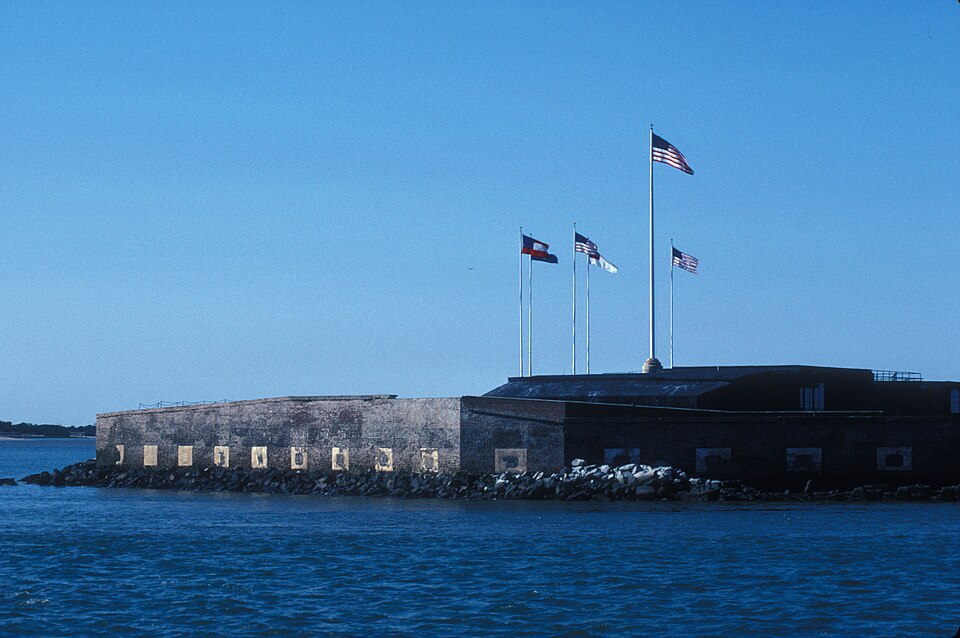
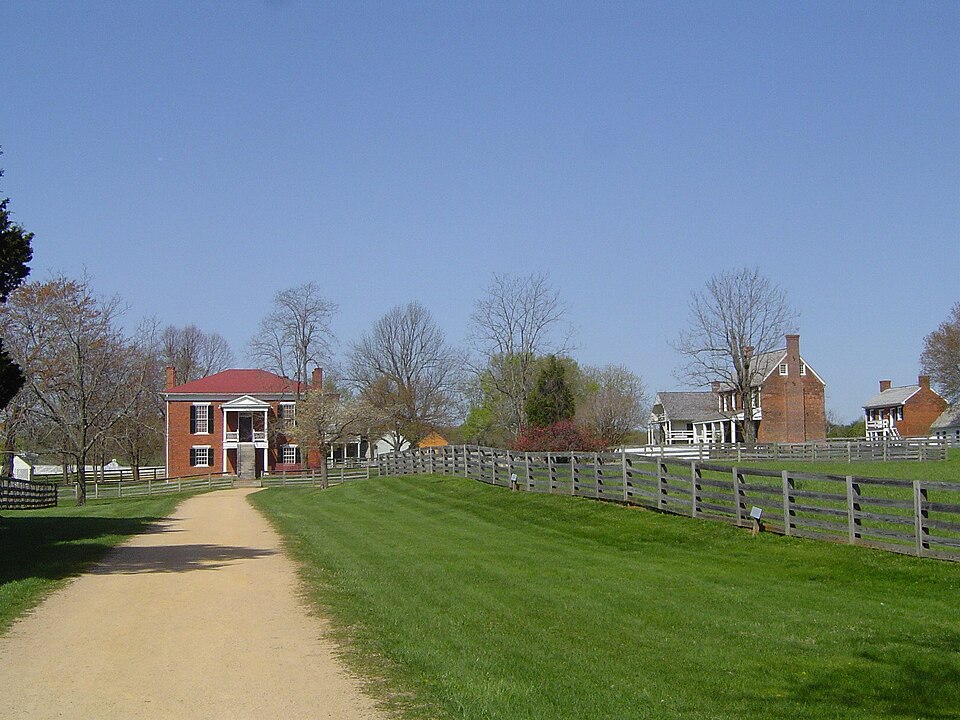
The Civil War began when Confederate forces fired on Fort Sumter, South Carolina, on 12 April 1861, and ended when General Robert E. Lee surrendered to General Ulysses S. Grant at Appomattox, Virginia, on 9 April 1865. The traditional death toll is about 620,000 soldiers, but a 2011 census-based study by historian J. David Hacker put the figure at about 750,000, possibly as high as 850,000. The war ended slavery in the United States with the 13th Amendment, ratified in December 1865.
How a nation split in two
Slavery was the cause of the war. By 1860 the United States held about 4 million enslaved people, almost all of them in the South, where cotton — picked by enslaved labor — was the country's most valuable export. For decades the North and South had argued over whether slavery could spread into the new western territories. The election of Abraham Lincoln in November 1860, on a platform of stopping slavery's expansion, was the trigger: South Carolina seceded in December 1860, and by February 1861 seven Southern states had formed the Confederate States of America.
Lincoln refused to accept secession, insisting the Union was permanent. When Confederate guns opened fire on Fort Sumter in Charleston harbor on 12 April 1861, four more states seceded. The North had the advantages: about 22 million people against the South's 9 million (of whom nearly 4 million were enslaved), most of the factories, most of the railroads, and most of the money. The South had the advantage of fighting on its own ground, with many of the country's best generals — above all Robert E. Lee — and a cause its soldiers believed in. Both sides expected a short war. Both were wrong.
The turning point: 1863
The war's bloodiest day came on 17 September 1862 at Antietam, Maryland, with about 23,000 men killed, wounded, or missing in a single day. That narrow Union victory gave Lincoln the moment he needed to issue the Emancipation Proclamation, which took effect on 1 January 1863 and declared enslaved people in the Confederate states free. It changed the war's meaning: from 1863 the Union was fighting not only to save the nation but to end slavery, and nearly 180,000 Black men joined the Union Army and Navy.
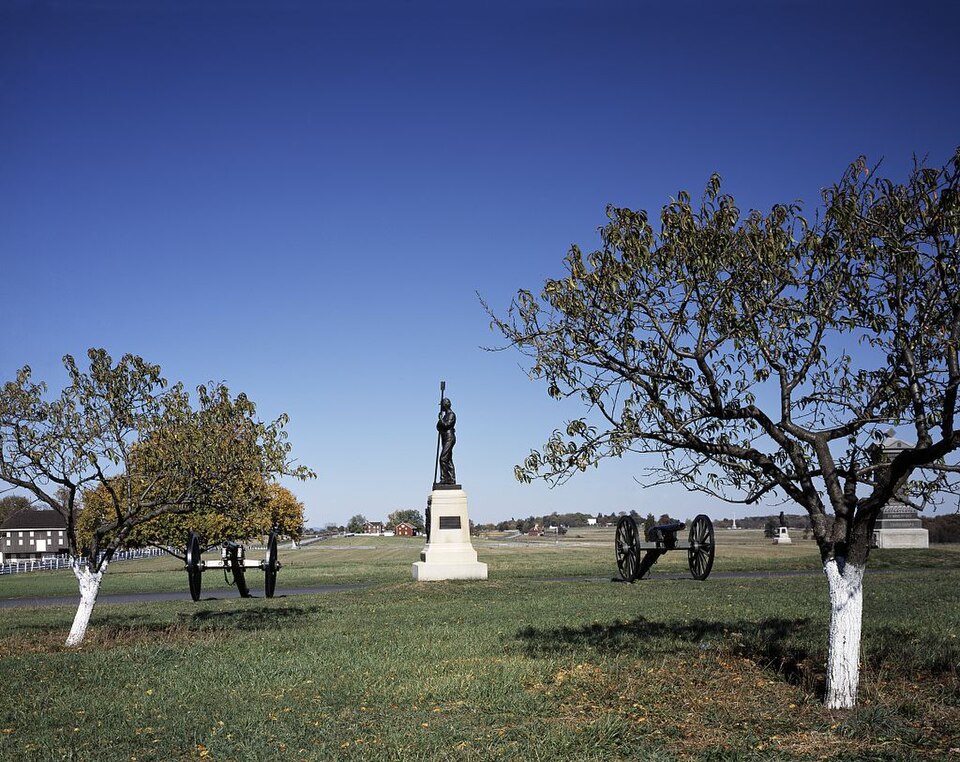
The summer of 1863 decided the war. At Gettysburg, Pennsylvania, from 1 to 3 July, Lee's invasion of the North was turned back in the war's largest battle, with about 51,000 casualties. On 4 July, the same week, Grant captured Vicksburg, Mississippi, giving the Union control of the Mississippi River and cutting the Confederacy in two. In November 1863 Lincoln traveled to Gettysburg and gave a two-minute address dedicating the battlefield cemetery — the Gettysburg Address — in which he defined the war as a test of whether a nation "conceived in liberty" could endure, and called for "a new birth of freedom." In 1864 Grant took command of all Union armies and ground Lee's army down in a brutal campaign in Virginia, while General William Tecumseh Sherman marched through Georgia to the sea, destroying the South's ability to keep fighting.
End of the war — and of slavery
Lee surrendered at Appomattox Court House on 9 April 1865, and the remaining Confederate armies followed within weeks. Five days later, on 14 April 1865, Lincoln was assassinated by John Wilkes Booth at Ford's Theatre in Washington — the first assassination of an American president. In December 1865 the 13th Amendment abolished slavery throughout the United States. The 14th Amendment (1868) made formerly enslaved people citizens, and the 15th Amendment (1870) forbade denying the vote on account of race — though in practice Black Americans in the South would be denied the vote for another century.
The war's cost was staggering. About 620,000 soldiers died by the traditional count, and about 750,000 by Hacker's 2011 estimate — more Americans than died in the two World Wars combined. Two-thirds of the dead died of disease, not bullets. The South's economy and infrastructure were wrecked, and the country faced the task of Reconstruction: rebuilding the South and deciding what freedom would mean for 4 million formerly enslaved people. Reconstruction's promises were largely abandoned by the 1870s, and full civil rights would wait until the 1960s. But the war had settled two questions forever: the United States was one nation, not a collection of states free to leave, and slavery was finished.
| Milestone | Date | What happened |
|---|---|---|
| Fort Sumter fired on | 12 Apr 1861 | Confederate guns open fire; the war begins |
| Antietam | 17 Sep 1862 | Bloodiest single day: about 23,000 casualties |
| Emancipation Proclamation | 1 Jan 1863 | Slavery declared ended in Confederate states |
| Gettysburg and Vicksburg | Jul 1863 | Twin Union victories turn the war |
| Gettysburg Address | 19 Nov 1863 | Lincoln's two-minute dedication speech |
| Lee surrenders | 9 Apr 1865 | Appomattox; the war effectively ends |
| 13th Amendment ratified | Dec 1865 | Slavery abolished in the United States |
Sources: National Park Service; Library of Congress; HISTORY.com, "How Many Died in the American Civil War?"; J. David Hacker, Civil War History (2011); Encyclopaedia Britannica, "American Civil War". Checked 28 November 2026.